
Tag Archives: big data

The Big Data You Need

Big Data is one of those phrases that in spite of its ubiquitous application, isn’t understood incredibly well. But basically any time you make a purchase (especially online), you not only contribute to big data, but chances are, you were impacted by it as well.

PayPal has been processing more than five million transactions every single day for years now. That sounds crazy, but other retailers are just as busy. Amazon, Ebay, Target- you name it and they’re processing huge numbers of sales each day- and they’re paying attention to what everybody is buying. Not long ago, this information was difficult to dig into and understand, but that’s not a problem anymore.

Big data is just what it sounds like. It’s looking at each and every transaction that takes place and looking for trends. Then, it’s used to predict future trends and markets. You probably see it when you buy and item and a website suggests that you might like this other, shiny new thing. Chances are when that happens, that you really might like the suggestion.

SlideKlowd jumps into the world of Big Data where others haven’t been able to before. Measuring attention and engagement has been difficult in the past (let’s be honest- it was basically impossible or really, really expensive), but with everyone bringing their smart phones, tablets and laptops into a presentation, class, or training session, it’s become easier to track.

We measure audience engagement by asking them to connect to a presentation using their personal technology- you know, the things that they bring anyway and play on when they get bored? That stuff. You, the presenter get to connect with them via questions, comments and any of the various interactions built into the SlideKlowd platform. But while that’s happening, we can tell you if somebody cut out and where, too.

Big Data is pointless until it’s examined and put to work. Our analytics include every completed interaction as well as those that were ignored by users. They also include what slide each and every viewer joined on, when they exited the presentation and every instance where they left in between. As a trainer, teacher or presenter of any sort, you get the chance to examine what could have caused a third of your audience to disengage at a certain part of your presentation. Were you too controversial? Boring? Did you spend too much time on a slide? Were you monologuing again? Any of these becomes visible as you drill down into the numbers.

Amazon and some of the other giants use big data to drive sales. Customers benefit from it because of a great suggestion based on other purchases- think of that awesome band that Pandora recommended after you liked that song by Kanye. By the way, they’re in town in a few weeks, you need to go buy tickets. Right now. SlideKlowd helps you see what’s working and what isn’t and helps you the teacher/presenter/trainer improve so you can keep peoples’ attention better and make sure that everyone is getting exactly what they need from your presentation.

Screen Shot 2013-11-07 at 1.53.21 PM

A Benefit to Asking Questions

One of the best ways to become a better speaker, teacher or presenter is ask questions. First, it gives your audience, classroom or co-workers an opportunity to contribute. This changes the presentation from a monologue into a conversation. Everybody prefers conversation to lecture. Second, it directs your presentation to the material that your audience, coworkers or class wants. It also helps you learn and grow.

Asking questions also enables you to collect informal content. This is the stuff that you want, because it points to what you did well, what people are interested in and helps a presenter, teacher or trainer infer what they could have done better or even what their audience isn’t interested in.

Two Types of Content
There are two kinds of content. The first is formal. Your formal content is the stuff that you create or curate. It’s your PowerPoint presentation, your notes and any other media that you include when you train, teach or speak to a group. The informal content is what happens during your class, presentation or event. It includes the human reactions to your content. It’s the way people answer those questions that good speakers ask. It’s how often a person in your audience checks out to do something else. This stuff is pure gold. 

Informal content hasn’t always been easy to measure. Speakers had to really pay attention to what was going on in an audience to understand when people were paying attention, when they didn’t like something and if they’d checked out or not. That kind of effort sounds exhausting and truly only works for small gatherings. Even the greatest presenters probably didn’t have a great way to record that kind of information, Either.

SlideKlowd Collects Informal Content
SlideKlowd pushes content to mobile devices- smart phones, tablets and laptops. This is fantastic because an audience gets up close and personal with what the presenter wants them to see. The platform also gives presenters the tools to ask questions and effectively collect answers, using the same devices that viewers are using to connect to a presentation.

SlideKlowd also logs when a person joins a presentation, when they cut out for a while and if they choose not to respond to a question. The platform also records questions, comments and social media interactions. All of this stuff paints a clear picture of how an audience liked or disliked, maybe even slept through a presentation.

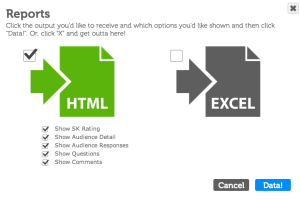
The platform presents all of this data in our analytics. Presenters or trainers have the option to view a sexy html version, or they can be downloaded in an Excel format. Both are incredibly useful.

Screen Shot 2013-09-05 at 8.50.12 AM

Informal Content Matters
This is a lot of information, but it’s all incredibly useful. Presenters, trainers, teachers executives and anybody else who has to speak to a group of people for any reason can use this information to improve their presentation skills or their presentation. Managers can use it to track employee engagement in training. The sales department can use SlideKlowd to gage potential buyers.